
Providing safe, reliable drinking water is the primary responsibility of group water schemes (GWSs). While treatment plants, reservoirs and distribution networks are the most visible parts of the system, an equally important role is played by compliance monitoring, which helps ensure that water quality continues to meet regulatory standards and protect public health.
The world of drinking water regulation is continually evolving. New scientific research, emerging contaminants and increased expectations around public health protection are driving changes in how water quality is assessed and managed. As a result, the monitoring requirements placed on water suppliers today are significantly different from those of only a few years ago.
What has Changed?
Recent updates to the European Union (Drinking Water) Regulations have introduced new parameters and strengthened monitoring programmes, reflecting an increased focus on proactive risk management and public health protection. The transitional arrangements for these new parameters ended on 11 January 2026 and the monitoring requirements now apply.
The Department of Housing, Local Government and Heritage has reminded local authorities of their obligations to ensure these requirements are fully implemented for private drinking water supplies. Your Local Authority should be in touch to discuss with you. Some of the key additions to drinking water monitoring programmes include:
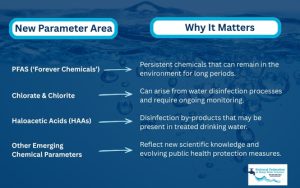
These changes demonstrate the shift towards identifying and managing potential risks before they become significant water quality issues.
How often is Drinking Water Tested?
Compliance monitoring is divided into Group A and Group B monitoring programmes.
Group A monitoring focuses on routine operational and microbiological testing, while Group B monitoring provides a more comprehensive assessment of drinking water quality, including many chemical parameters.
For many group water schemes, monitoring frequencies are broadly as follows:
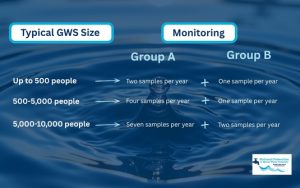
Monitoring requirements increase as the population served and volume of water supplied increase. Individual monitoring programmes are determined by the relevant local authority in accordance with the Drinking Water Regulations and specific risks which may affect your individual GWS.
Understanding PFAS
Among the most significant developments is the introduction of monitoring for PFAS (Per- and Polyfluoroalkyl Substances).
PFAS are often referred to as "forever chemicals" because they break down very slowly and can persist in the environment for many years. They have historically been used in a range of industrial and consumer products including:
- Firefighting foams
- Non-stick cookware
- Waterproof materials
- Food packaging
- Various manufacturing processes
While PFAS are not currently considered a widespread issue in Irish drinking water supplies, their inclusion in drinking water monitoring programmes reflects growing international concern regarding their long-term environmental persistence and potential public health impacts.
For group water schemes, PFAS monitoring demonstrates the increasing emphasis being placed on identifying emerging risks early and ensuring that drinking water supplies continue to meet the highest standards of safety and quality.

Monitoring and Drinking Water Safety Planning
Monitoring is not simply about demonstrating regulatory compliance. It is an essential management tool that helps schemes:
- Detect emerging water quality issues.
- Verify that treatment processes are operating effectively.
- Identify potential risks in source waters.
- Protect public health.
- Maintain member confidence.
- Support evidence-based investment decisions.
Monitoring data also plays a critical role in the development and implementation of Drinking Water Safety Plans (DWSPs).
Drinking Water Safety Plans require schemes to identify potential hazards across the entire water supply system, from source to tap. Monitoring results help validate risk assessments, identify trends and confirm that existing control measures are working effectively. As Drinking Water Safety Planning becomes increasingly important across the sector, the value of good monitoring data continues to grow.
What should your GWS do?
Committees and boards play a critical role in ensuring their scheme remains compliant and resilient. Committee members should familiarise themselves with the latest monitoring requirements and regularly review monitoring results as part of their governance and oversight responsibilities. Adequate resources should be allocated to support compliance activities, risk management and future planning.
Committee members should also complete the NFGWS online training modules to strengthen their understanding of drinking water regulations and support informed decision-making. Ongoing engagement with NFGWS development officers is important to assist with Drinking Water Safety Plans, source catchment risk assessments and the implementation of evolving regulatory requirements.
Managers and staff are at the forefront of delivering safe drinking water and maintaining compliance. They should remain fully aware of the monitoring programme assigned to their scheme and ensure that all required samples are collected and submitted on schedule. Monitoring results should be reviewed promptly, with any unusual trends, failures or exceedances investigated and addressed without delay.
Managers and staff also have an important role in supporting the development, review and implementation of Drinking Water Safety Plans, helping to ensure that risks are identified and managed proactively across the water supply system.

Further Information
The Environmental Protection Agency (EPA) has published comprehensive guidance for private water supplies, including information on monitoring requirements, risk assessment, compliance obligations and drinking water quality management.
Read the EPA guidance here: Private Water Supplies Guidance | Environmental Protection Agency
This article originally featured in the most recent edition of the Rural Water News magazine. To read the full edition and to sign up to our magazine mailing list, click here.